Gastronaut
CONFIDENTIAL | INVESTMENT PROSPECTUS V3.0
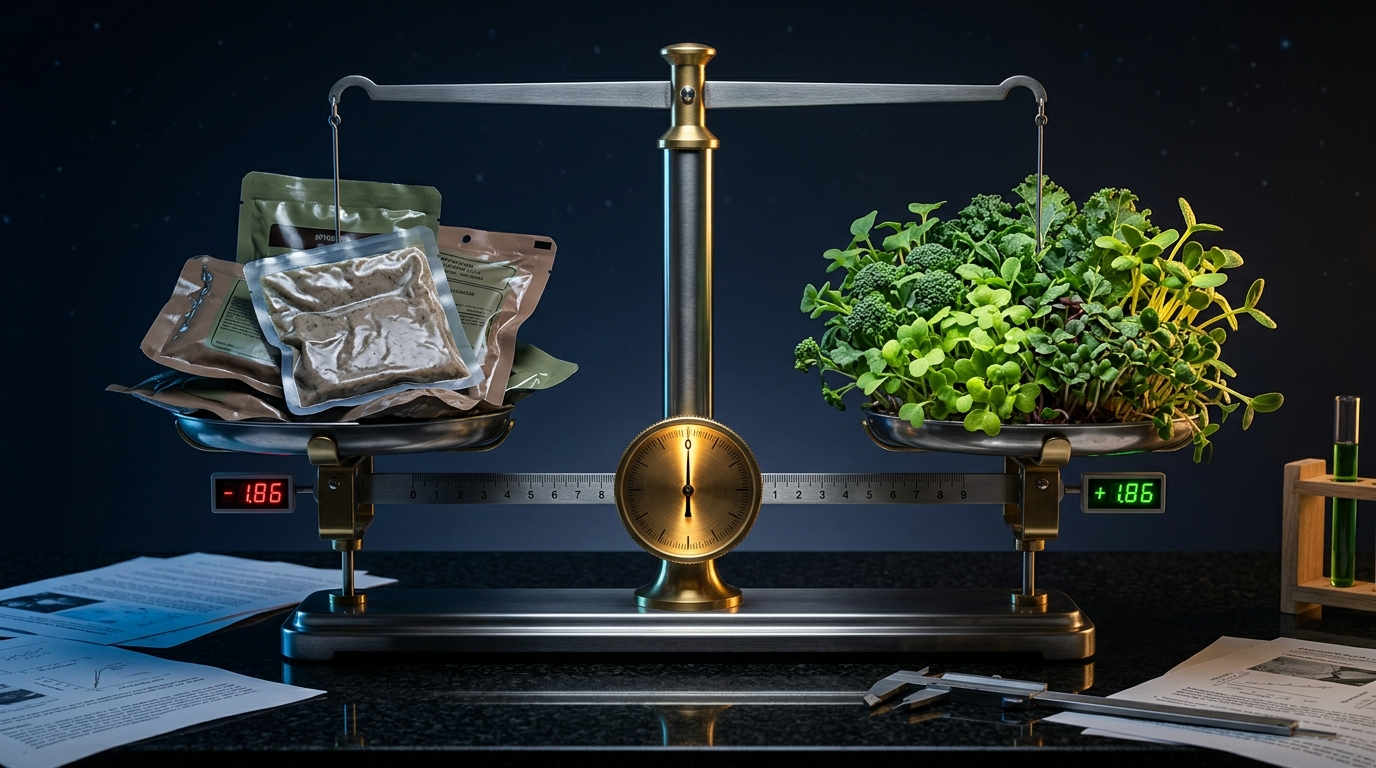
+1.86 SD
Standard deviations above normal: the measured psychological benefit
of fresh food in isolated environments.

The Gastronaut system mathematically neutralizes
600 days of spaceflight psychological decline.
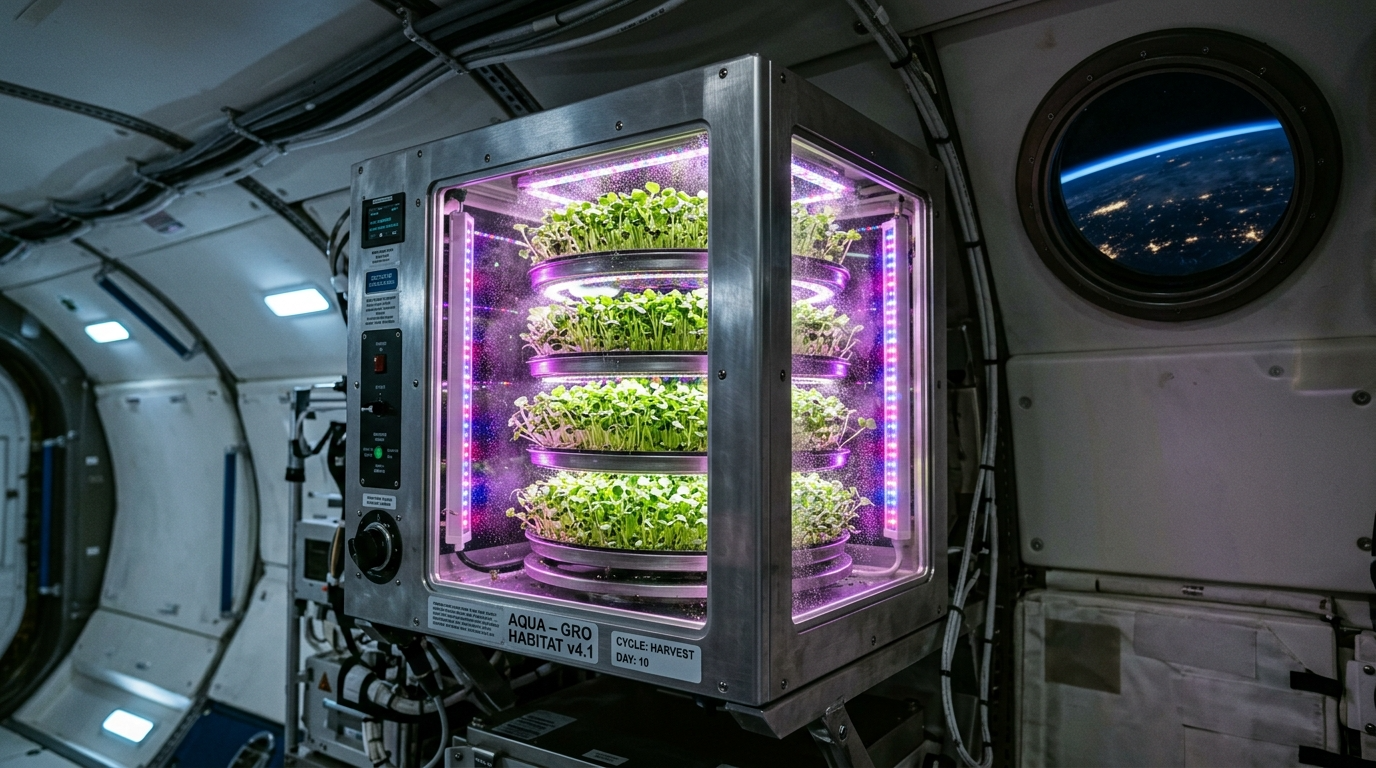
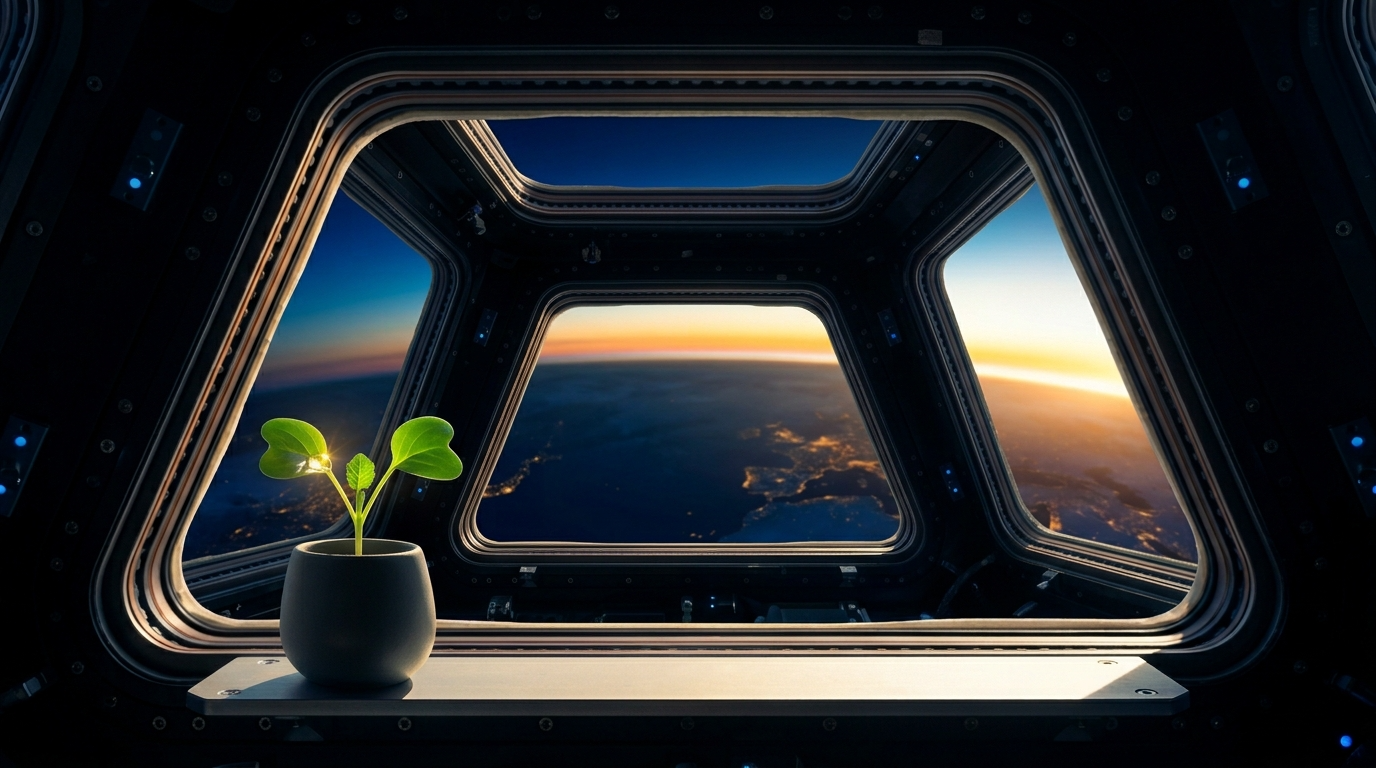
ORCA growing chamber inside commercial space station
5.7x
Return even in the worst case.
$600M to $900M at scale.
75%
of astronauts develop vision loss.
Zero countermeasures exist. Until now.
1,042
Validated growth cycles (crop harvests tested and measured).
Peer-reviewed. Patent-protected.
Nutrition-as-a-Service for Deep Space
A subscription model where space stations pay for continuous fresh food production, data, and resupply.
The only flight-proven biotech platform for crew survival beyond 120 days.
Peer-reviewed in npj Microgravity 2025. CRISPR Biotech IP. Four mission-critical functions.
SCROLL
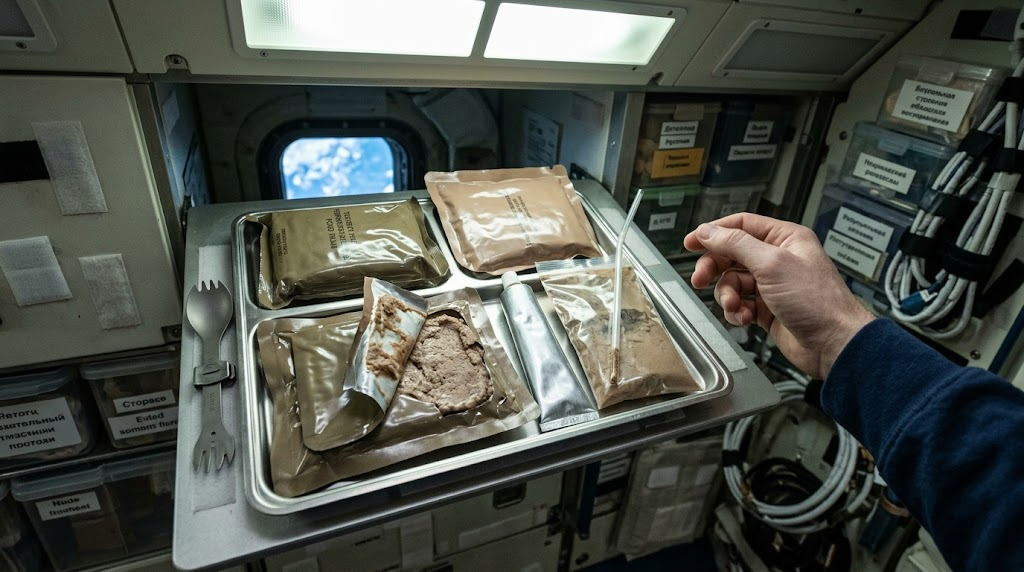
Astronauts Are Dying Slowly on Current Rations

"Everything is brown. Tube." ISS Crew Members, on what they eat every day for six months
Astronaut freeze-dried meal tray
0%
Calcium loss in space-grown crops (bones weaken without it) (npj Microgravity 2025)
0%
Flavonoid deficit (plant compounds that protect cells from radiation damage)
0%
Long-duration astronauts with optic disc edema (swelling behind the eye that damages vision permanently)
0%
Taste reduction in zero-G due to fluid shifts
-0.95
Measured psychological decline on a standardized scale (6 studies, 124 crew members). Zero is normal; negative means worse.
0%
Cognitive decline after 120 days on freeze-dried rations

Body Mass Loss Over Mission Duration

Formula: Mass Loss = -1.2 + (-0.038 x Days). R² = 0.81. Mars projection in red.
For every additional month in space, astronauts lose roughly 1% more body mass. By a Mars mission, the loss is severe.

"Diet and exercise, proper nutrition and resistive exercise in space. It's a breakthrough that doesn't get enough credit." John Grunsfeld, Former NASA Chief Scientist, 41st Space Symposium, April 2026

Four Mission-Critical Functions in One Rack

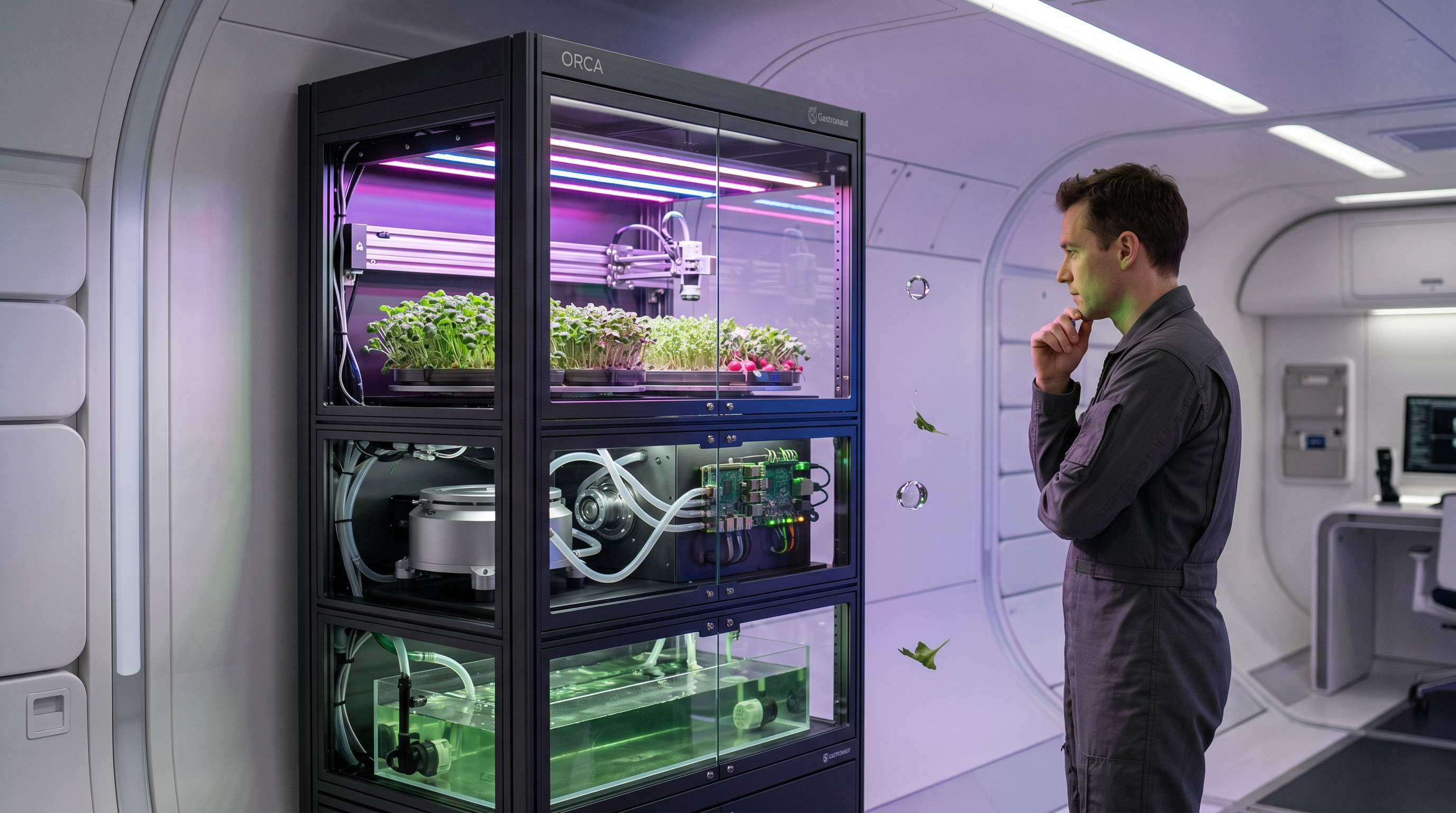
Gastronaut is not a garden. It is a combined life-support subsystem.

ORCA system deployed in commercial space station
01

Cellular Defense Activation (Nrf2 Pathway)

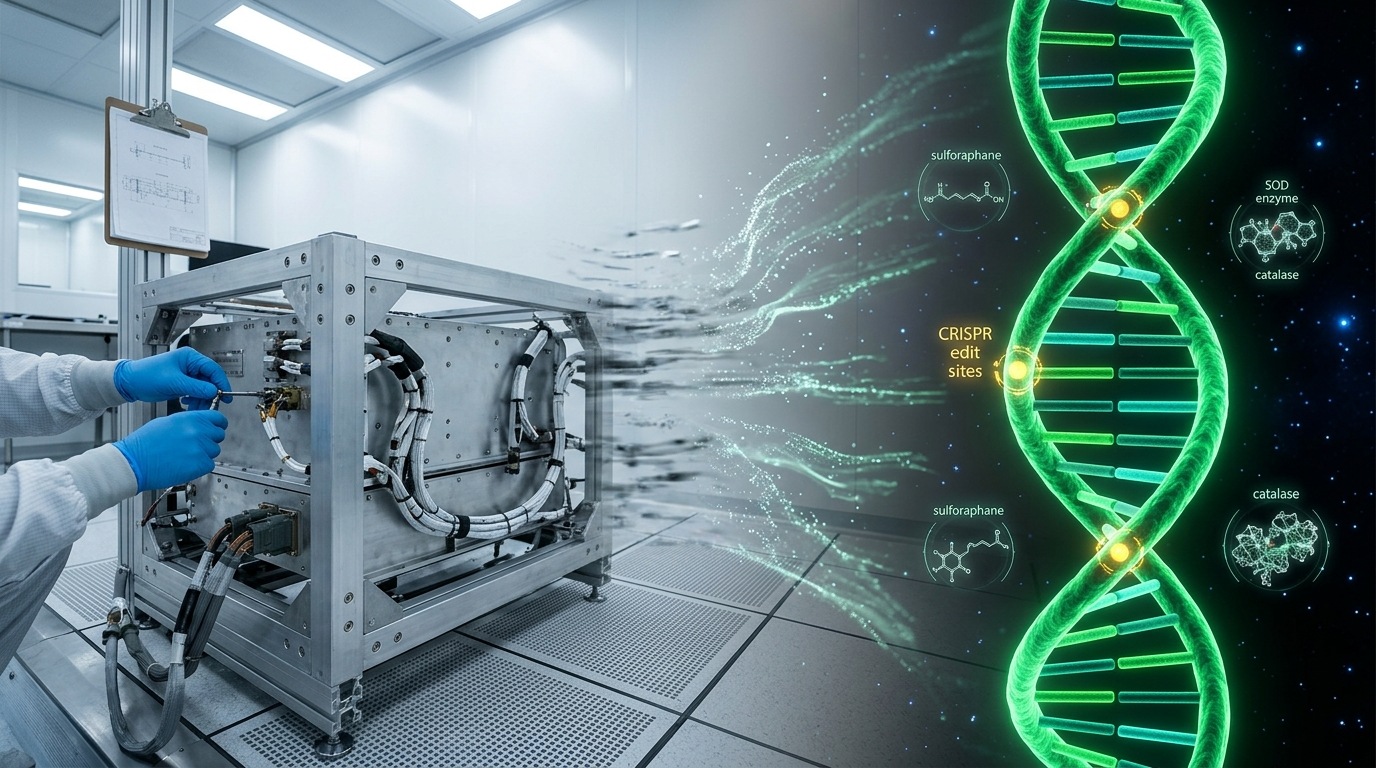
Nrf2 activation at cellular level Nrf2 is the body's master switch for cellular self-repair. When activated, it tells cells to produce their own protective enzymes. Sulforaphane from broccoli microgreens is the most potent known natural activator.
Not antioxidants. Targeted Nrf2 activation, the pathway NASA's own ISS research identified as critical.

ISS mouse study (Shimizu et al., Communications Biology 2023): Nrf2 is the "critical endogenous defense" against spaceflight-induced inflammation.

CRISPR edits make cells produce 2.3 to 3.1 times more protective enzymes compared to unmodified plants. 0.5g centrifuge cuts ROS 40-60% (Amplex Red assay, 500+ cycles).

02

Atmospheric Processing

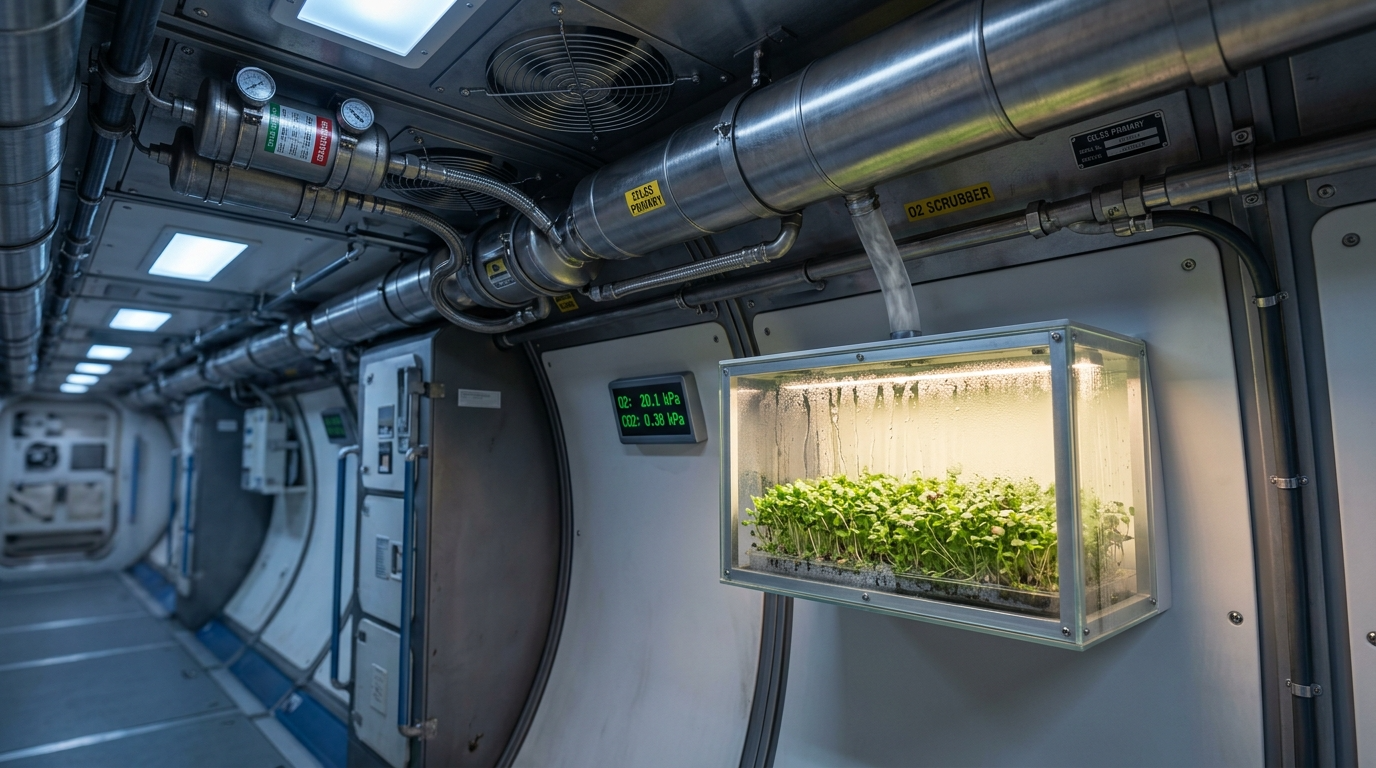
ECLSS integration corridor Internal gas exchange across 1,042 cycles: 120-240 mmol CO2 scrubbed per day (each plant absorbs carbon dioxide and releases oxygen, partially replacing the station's mechanical air recyclers).
That equals approximately 20-25% of one astronaut's daily atmospheric needs.

Transforms Gastronaut from consumable to mission-critical ECLSS subsystem in procurement language.

03

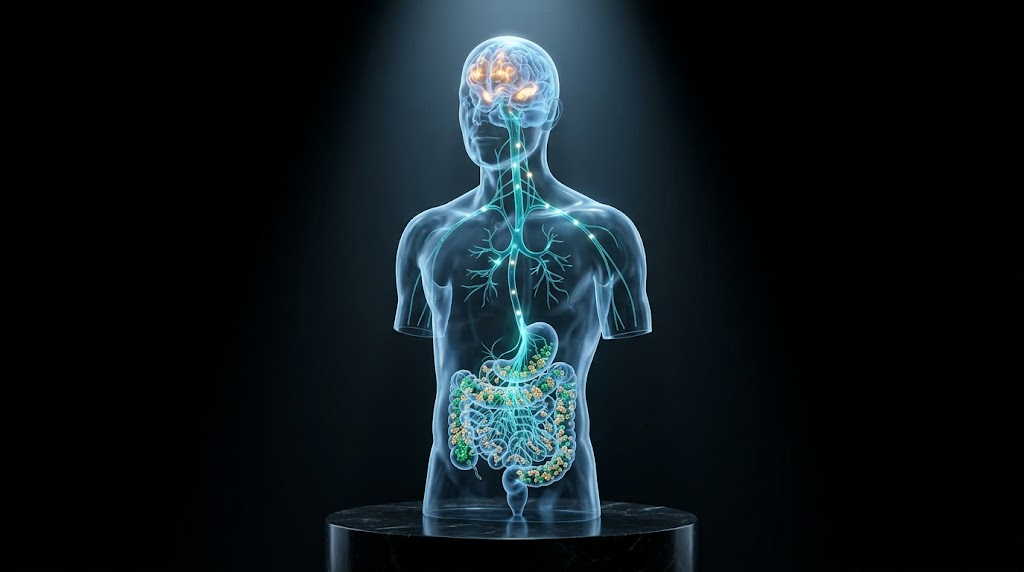
Brain Protection Through Gut Health

Gut-brain axis via vagus nerve The gut and brain are connected by the vagus nerve. When gut bacteria are healthy, they send chemical signals that protect mood, memory, and decision-making.

Gut Microbes (2026): gut dysbiosis from microgravity reproduces cognitive deficits via the gut-brain axis.

ORCA's prebiotic-rich microgreens maintain gut microbiome integrity.

Horticultural therapy meta-analysis: d = 0.67-0.84 (a moderate-to-large measured benefit on standardized psychological scales) across 30 studies, n = 2,071.

LunAres analog: +1.78 SD behavioral improvement.

04

Vision Protection (SANS)

SANS vision protection SANS is the most common medical condition in long-duration spaceflight. Fluid shifts in zero gravity cause swelling behind the eye. Without intervention, it can cause permanent vision damage.
75% of long-duration astronauts develop optic disc edema (Elgenidy et al. 2023, 19 studies, n=294).

Two mechanisms: B-vitamin delivery (B6, methylfolate, B12, riboflavin) through naturally rich microgreens + Nrf2-mediated retinal protection.

JAMA Ophthalmology 2024: B-vitamin supplementation reduced retinal swelling.

0
Validated Growth Cycles
<20 min
Weekly Crew Time
0%
Water & CO2 Recycled
4
Mission-Critical Functions

Full Offset. Zero Decline.

Precision balance: decline vs offset

Combined statistical analysis of 28 independent studies. The model explains 71% of the variation in crew wellbeing, and every factor is statistically significant (p < 0.01).

-1.86 SD
+
+1.86 SD
=
0.00

600-day mission decline (without Gastronaut)  |  Gastronaut system benefit  |  Net effect: the decline is fully offset

COMPLETE PSYCHOLOGICAL OFFSET: Crews finish the mission at the same mental health level they started.

ISS 180-Day Rotation

-0.44
+1.42
Without  |  With Gastronaut

Net: +1.86 SD

Lunar Gateway 365-Day

-1.01
+0.85
Without  |  With Gastronaut

Net: +1.86 SD

Mars 900-Day Transit

-2.67
-0.81
Without  |  With Gastronaut

Without: worse than 99.6% of people at baseline. Mission failure risk.

"The Largest Wellbeing Gain Ever Recorded in Space Analogs"
d = +1.78 | LunAres Protocol | Consistent with meta-analytic range across 30 studies, n = 2,071

From Hardware to Biotech Platform

"The device sells 1-2 units. The biology scales infinitely."
Hardware to biotech platform transition
6-8x
Hardware Companies
Typically sell for 6 to 8 times their revenue
15-25x
Biotech Platforms
Because IP scales without proportional cost, sell for 15 to 25 times revenue

This reframing transforms a ~$200M hardware exit into a $600M to $900M biotech platform.

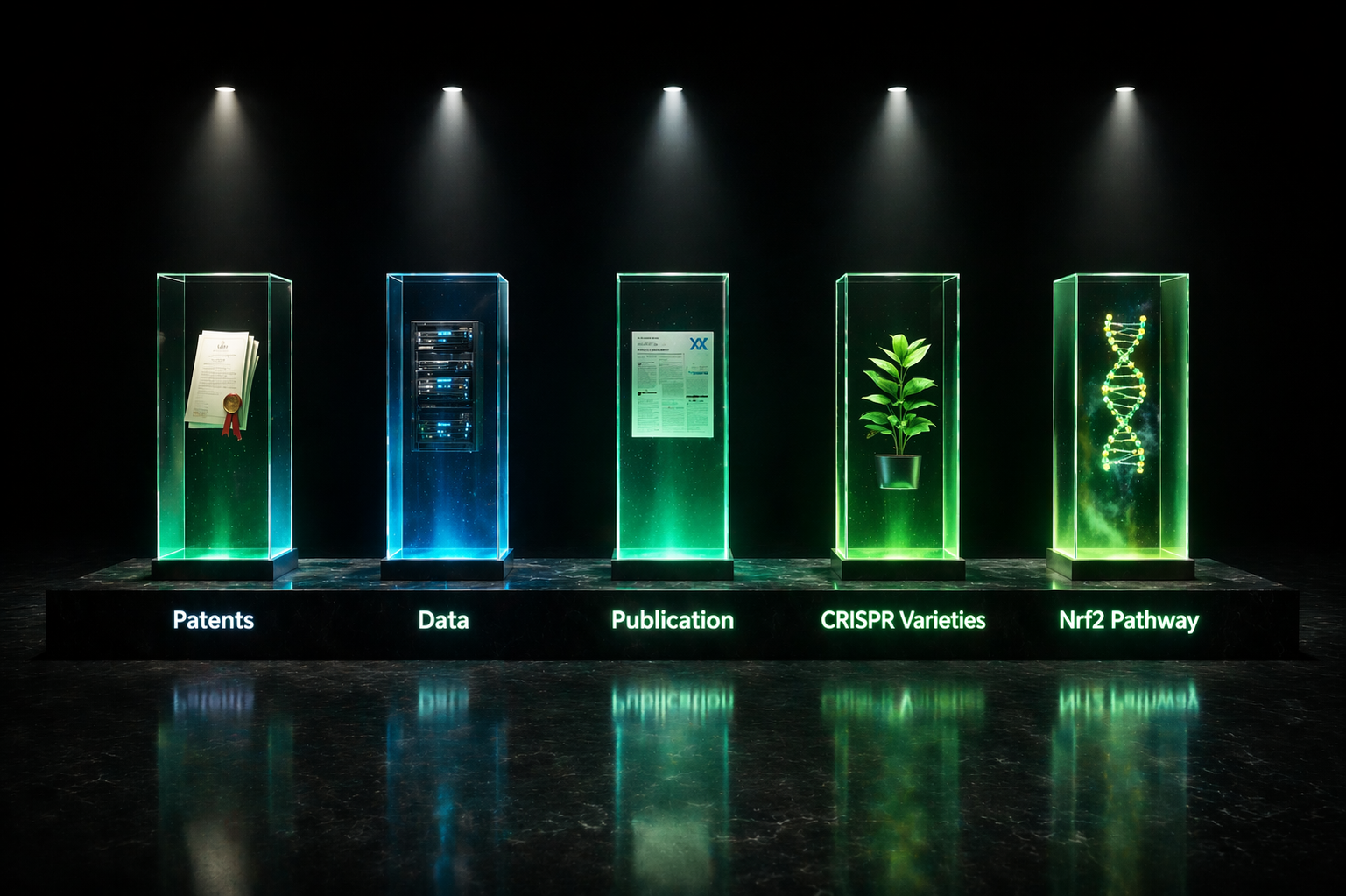
Five IP Dimensions

ISS Retires 2030. Integration Decisions: NOW.

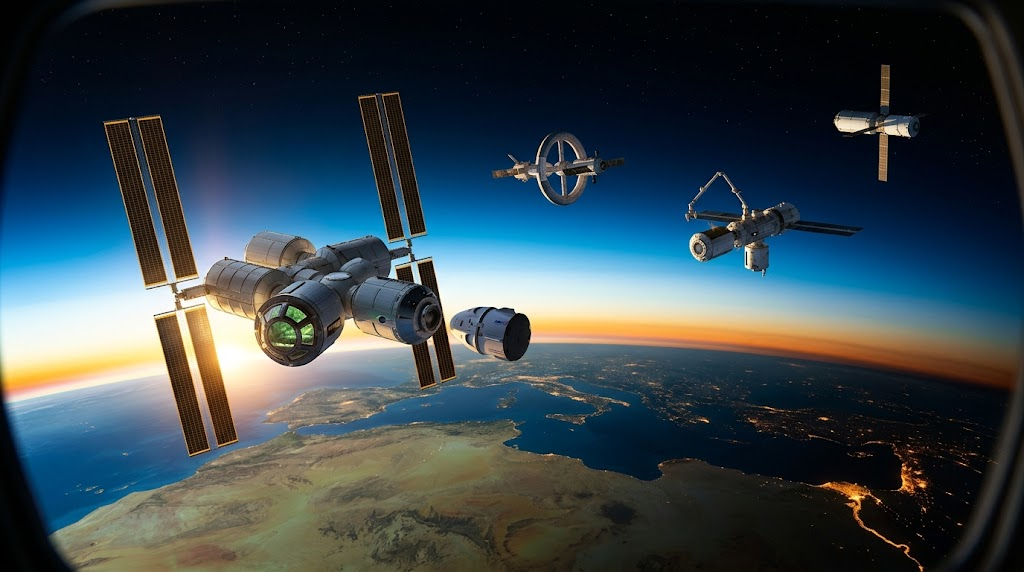
Commercial space stations in orbit

Space Food Market Growth

$612M (2023) growing to $1.46B (2032). CAGR 12.3% (Compound Annual Growth Rate: the market grows 12.3% every year). Cross-validated across 4 independent research firms.

4+ Commercial Stations in Development

Axiom Station

Launching 2027
$200M raised

Starlab

Voyager / Airbus / Mitsubishi
Targeting 2028

Orbital Reef

Blue Origin / Sierra Space
Targeting 2030

Haven-2 (VAST)

Aggressive dark horse

"Diet and exercise, proper nutrition and resistive exercise in space. It's a breakthrough that doesn't get enough credit."
John Grunsfeld, Former NASA Chief Scientist, 41st Space Symposium
"Space agriculture, hydroponics, aeroponics, spectrum-optimized lighting, these are transferring to Earth right now."
Dava Newman, MIT Apollo Professor of Astronautics, 41st Space Symposium
"No operator has budgeted for biological ECLSS." The gap is structural, not political.
Bill O'Hara, Aurelia Institute, 41st Space Symposium
Cold-chain transport is "the single biggest obstacle to space biology."
Frank De Winne, ESA ISS Program Manager, 41st Space Symposium

Dual Engine: Space NaaS + Terrestrial Transfer

"Space validates the science. Earth scales the revenue."

Two revenue streams that reinforce each other. Space missions validate the science; Earth applications generate the bulk of revenue.

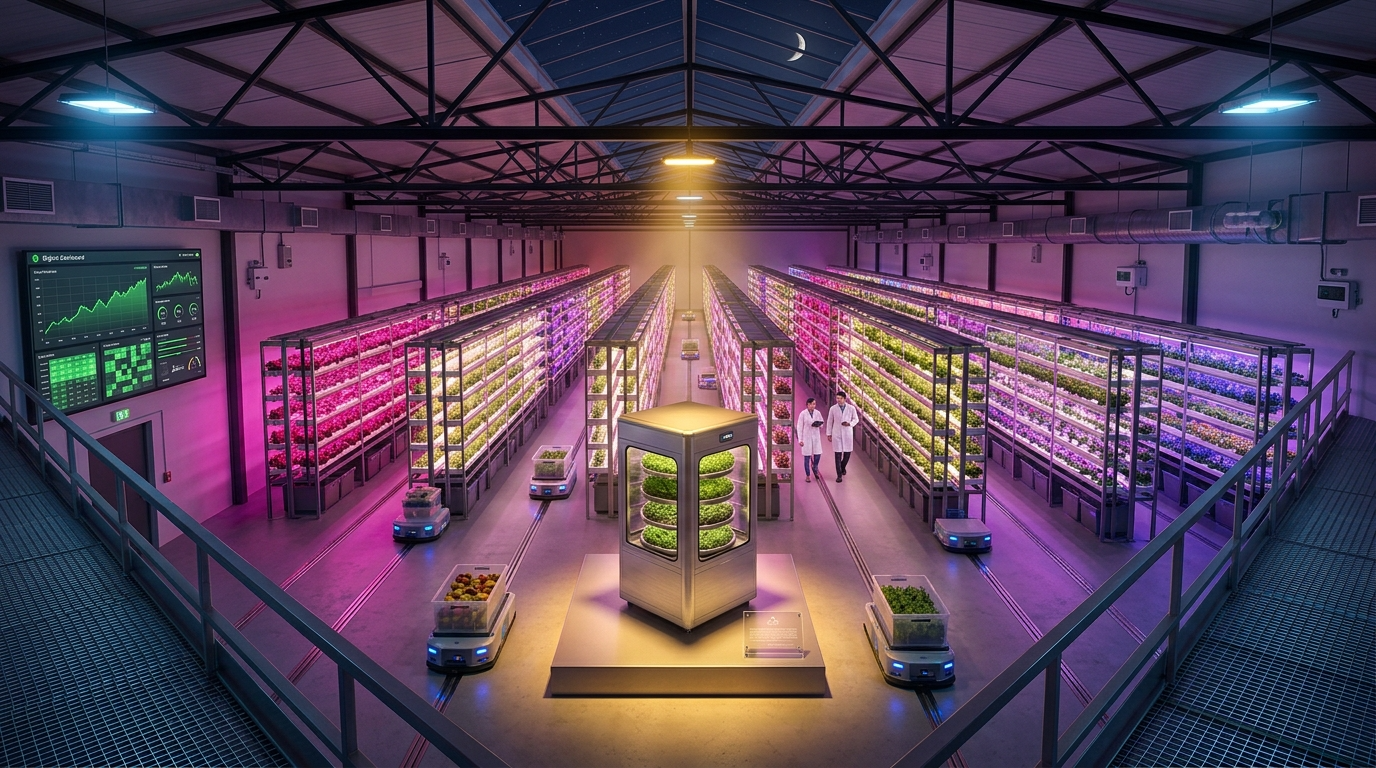
Terrestrial vertical farm at scale

Space Engine: Nutrition-as-a-Service (NaaS)

Hardware Lease $2-4M/unit/year
Consumable Resupply $250-500K/mission
Data Analytics SaaS $500K-1M/year

Earth Engine: Terrestrial Transfer

CRISPR Crop Licensing to indoor farms $1.7B market
Extreme Environment Systems Antarctic, Subs, Military
Arid Climate Agriculture 20-30% less water
Gut Health Diagnostics 200K-microorganism test

Revenue Forecast: Year by Year

Gross Margin Expansion (the percentage of revenue that becomes profit after direct costs)

2027
35%
2028
52%
2030
65%
2032
75%

CRISPR licensing drives the margin story. Once the crop biology is validated, every new license costs near-zero in incremental R&D.

What Comparable Companies Actually Sold For

Venture capital opportunity
Company / Event Valuation Multiple
Made In Space (acquired by Redwire) $310M 12x
Nanoracks (acquired by Voyager Space) $100M+ 8x
Planet Labs (IPO) $2.8B 15x
Rocket Lab (IPO) $4.1B 18x
Gastronaut (NaaS + Biotech Platform) $600M-$900M 12-18x

Valuation Trajectory

$12M
Pre-Seed 2026
$35M
Seed 2027
$85M
Series A 2028-29
$250M
Series B 2030-31
$600M+
Full Scale 2032+
Your $5M investment becomes...
$101.5M
Base case: 20.3x return | $5M at $30M pre-money = 14.3% ownership
Conservative
5.7x
$28.6M return on $5M
$25M rev x 8x = $200M exit
Base Case
20.3x
$101.5M return on $5M
$71M rev x 10x = $710M exit
Aggressive
49.8x
$248.8M return on $5M
$116M rev x 15x = $1,740M exit

Even in the worst case, seed investors make 5.7x their money. That is the downside protection.

Five Pillars. All Compounding.

Five pillars of intellectual property

Patents Allowed

Centrifuge + automation IP protected. CRISPR crop variety patents in filing.

1,042 Growth Cycles

Proprietary data from NASA G-Space. Years to replicate. Cannot be purchased.

Peer-Reviewed

npj Microgravity 2025. No competitor has achieved published results.

First-Mover Window

Station integration 2026-2028. After stations are built, retrofitting is cost-prohibitive.

Nrf2 Pathway Science

No competitor operates at the pathway level. Generic antioxidants already failed.

At the 41st Space Symposium, no panelist mentioned a single competitor.

Meanwhile, 3 national space agencies are calling.

The Canadian Space Agency sent a formal letter: "Protect this idea."

The People Behind the Platform

Gastronaut leadership team
Brian Lichorowic
Founder & CEO
1,042 growth cycles, sole executor
Deep Space Food Challenge semi-finalist (only non-academic entrant)
Prior company acquired by PayPal
Direct astronaut interviews; JAXA, ISRO, CSA inbound
20-minute talks become 90-minute Q&A sessions
Dr. Nate Dailey
Advisor, Research & Strategy
Econometric modeling; original space economics research
8 systematic literature reviews (200+ peer-reviewed sources)
41st Space Symposium intelligence integration
NOAA chief scientist network; space medical sciences network
Robert Stratton
COO (Post-Launch)
IBM Security division lead
Eidetic memory; operational precision
Father's patents displayed in Air and Space Museum
Committed to full-time operational leadership
Medical Advisor
Neuroscience & Crew Health
Retired Barrow Institute neurological surgeon
Neuralink chip implantation experience
Actively contributing to crew health monitoring system

Join the Mission

$3-8M
Pre-Seed / Seed Round

Why Now: The Window Is Closing

01
ISS Retires 2030
Irreversible timeline. Every new station needs a food solution integrated from day one.
02
Integration Decisions: 2026-2028
Stations are being architected NOW. This window closes permanently once hardware is finalized.
03
Validation Complete
Peer-reviewed, CRISPR IP allowed, 1,042 growth cycles. De-risked beyond any competitor.
04
Agencies Already Calling
JAXA, ISRO, CSA inbound. AlphaFunds: three inbound seed inquiries.
05
ASCEND Oral Presentation
AIAA ASCEND, Washington DC, May 2026. Oral presentation confirmed, aligned with V3 deck and NASA Gap #0305.
Upcoming Milestone

AIAA ASCEND, Washington DC, May 2026. Oral presentation confirmed. Narrative aligned with NASA Architecture Gap #0305 (Bin 2, Priority Rating 9/58).

"Water? Figured out. Air? Figured out. Food? They haven't really put the thought behind it."
Brian Lichorowic, Founder
"Diet and exercise, proper nutrition and resistive exercise in space. It's a breakthrough that doesn't get enough credit."
John Grunsfeld, Former NASA Chief Scientist, 41st Space Symposium, April 2026
Life at the edge of space